I apologize in advance for the size of this Twilight review, which can only be described as pre-historically mammoth. Stock up on food and water, and enjoy.
It took me a while to get through
Twilight, the best-selling YA novel by Stephenie Meyer; a full two weeks, much longer than expected. Despite its 500 pages, the word count is a moderate 118,000, much shorter than any of the last four Harry Potters, which I happily devoured in 24 hour periods. I took breaks during
Twilight to read three other YA books: two mysteries by Christopher Pike and the charming
The True Confessions of Charlotte Doyle by Avi, before marathoning the last 200 pages to get it over with.
Prior to succumbing to the
Twilight book-fever last fall, I heard a lot about the series, and much of the word-of-mouth wasn't promising. I saw the movie in November at the urging of a good friend (
review is here), and while it was better than expected, I was still reluctant to suffer bad writing without at least getting to bitch about it. As I am currently between book clubs, bitching via blog is my only outlet.
It's fair to say that I approached the text with a certain bias from tons of pre-exposure. At the very least, having seen the faithfully adapted film meant I already knew the story and I had a good idea of where the story would end up by book four (creepy vampire birth). The questions I wanted to answer for myself were:
- Is the writing better or worse than the abysmal Eragon?
- Just how disturbing is the Bella-Edward relationship?
- Are the characters really Mary Sues?
- What lessons can be learned by YA writers looking to be the next big thing?
From page one, I was willing to like it, I just wasn't expecting to.
Quickie SummaryIn Twilight, ordinary Bella Swan moves from sunny Phoenix, Arizona to gloomy Forks, Washington, where she meets Edward Cullen, an uber hot guy at her high school who happens to be a vampire. When Bella discovers Edward's secret, the two begin an angsty and obsessive courtship, interrupted only when new baddie vampires come to town with a thirst for humans, and Bella in particular.
The Style

I am happy to say that
Twilight was not the worst book I've ever read. That honor still belongs to the painfully derivative
Eragon by Christopher Paolini, a sixteen year old who got published by his parents and somehow became a best-selling sensation, despite his awful prose and blatant thievery of
Lord of the Rings,
Star Wars, and other high-fantasy classics. Only my desire to rip
Eragon apart via book club review could keep me from literally ripping the book to shreds. Instead, I settled for throwing it across the room and screaming my disgust on several occasions.
Twilight, fortunately, did not elicit such a strong reaction. As a whole, the novel was mediocre, falling somewhere in a long line of disappointments including
The Nanny Diaries,
A Wizard, A Witch, and Two Girls From Jersey, and a dozen other books that I read and then forgot.
The greatest weakness of
Twilight's prose was not so much the pedestrian style but the overwrought details. Three quarters of the book read like entries in Bella's private journal, describing outfits she wears, food she eats, and her entire school day from first period through gym - over and over and over. There is very little plot to be found other than Bella and Edward's constant mooning and repetitive "we should but we shouldn't" angst until around page 380 when the vampires finally play baseball and a "real" antagonist appears.
A good editor could have done a lot to tighten both the plot and the language. Meyer relies too heavily on adjectives and adverbs, and many of her melodramatic descriptors feel so out of place in a contemporary YA novel that I actually had to take regular breaks to roll my eyes before I could continue reading. Examples include Edward's
alabaster skin, his
scintillating arms, and his
sculpted, incandescent chest. Meyer doesn't only introduce the novel's vampires as being extraordinarily attractive, but actually reminds the readers of their extreme hotness an average of once per page. Edward is a
magnificent Adonis and all lesser immortals bow before him.
The thesaurus can be a great friend, but if the friendship is abusive, there can be dire consequences for all.
The CharactersI am probably one of the few
Twilight critics that will admit to being intrigued by Meyer's twist on the vampire mythos. I have no problem with the fact that Meyer's "vegetarian" vampires are immune to sunlight, holy water, and garlic, and that they love baseball and sparkle in the daylight. Many critics have been particularly negative about the "sparkly" thing, finding the idea laughable, but I would argue that it works in Meyer's world. Because of their skin condition, vampires can't blend in during the day, hence only coming out at night and living in mostly sunless towns. Sparkling also furthers the
Twilight dichotomy of beautiful = deadly.

Isabella Swan,
Twilight's heroine, is supposed to be identifiable to every young woman who has ever felt like a fish out of water: insecure, lonely, and failing to connect with her peers. In other words, Bella = average high school girl. The problem is that Bella is such a generic stand-in for the author/reader that she fails to have a personality of her own. She does well in school, particularly biology, but this braininess is off-set by her total lack of coordination, and that's about all the reader knows. It's hard to identify any of Bella's interests, aside from Edward. Does she have dreams or ambitions? I read the book less than a week ago and honestly can't remember anything she actually likes to do, other than snogging vampires.
By the end of the book, Bella is so desperate to shuck the mortal coil and just-become-a-vampire-already, that it's suggested that she has absolutely nothing to live for aside from Edward, which is not the case with most teenage girls, even at their most depressed/obsessed.
Without non-vampire interests or a desire to live, Bella suffers from a lack of relatability, and this problem is compounded by the fact that she, as a character, fails to relate in general. Her estrangement from her parents is fully self-imposed. She isn't open and honest with her mother (whom she claims to be close with) and doesn't bother to get to know, or even talk with, her father, who seems to be a nice enough guy. Throughout the book everyone at Bella's new high school is open to liking her; they invite her on group trips, sit with her at lunch, and half the boys at school want to date her. When faced with this much acceptance, Bella's refusal to form genuine bonds with anyone human makes her come across as a self-centered and elitist bitch, rather than an identifiable outcast.
But are they really Mary Sues?Wikipedia defines a "Mary Sue" as
a fictional character, particularly characterized by overly idealized and hackneyed mannerisms, lacking noteworthy flaws, and primarily functioning as wish-fulfillment fantasies for their authors or readers.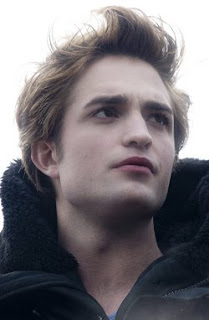
Although I can't speak for the rest of the series, in
Twilight, the vampires of the Cullen clan are pretty Mary Sue-ish. They are the ultimate predators: extremely strong, fast, attractive to their prey, and dangerous all-around. They have no real weaknesses, unless you count their vegetarian consciences, and even when baddie vampires come to town, the Cullen clan assures Bella that they are so many and so powerful that they aren't in any
real danger. She is, but they aren't.
This god-like invincibility, while convenient, can cause some real story problems. As humans, we are so naturally flawed that "perfect" tends to be a real turn-off, which is why "Mary Sues" are criticized rather than lauded by readers. When characters lack vulnerabilities, the stakes can only be raised so high, and the story can only be so interesting.
The only helpless protagonist in
Twilight is Bella, and it's only her own idiocy that gets her into danger, away from her vampire protectors.
An exchange from page 374, perhaps confirming that the vamps are indeed a bit Mary Sueish:
"I am a little disappointed," I teased.
"Why?" (Edward) asked, puzzled.
"Well, it would be nice if I could find just one thing you didn't do better than everyone else on the planet."
My big unanswered
Twilight-verse question is this, if the vampires are so goddamn invincible, why haven't they taken over the world? From what I can tell, the vampires have no vulnerabilities and no real enemies aside from their own kind and a (presumably small?) pack of werewolf natives located in the Pacific Northwest. It's difficult for vampires to turn humans, but not impossible, which is how they can increase their own numbers. So why are the inherently evil vampires forced into roaming the Earth as nomadic scavengers rather than running amok, ala the
Buffyverse vampires in the disturbingly creepy third season episode
The Wish? It's not like any of us could stop them.
Mary Bella Swan?I haven't read all of the books so I can't conduct an official
Mary Sue Litmus Test on Bella Swan's character, but according to
other readers, Bella scores an off-the-charts 81 points with Edward Cullen surpassing even her impressive score with a hard-to-believe 98 points.
As previously summed up, Bella Swan's character, right down to the first-person narrative, is most definitely a stand in for the writer/reader. The uber hot vampire and every mortal and immortal character that crosses paths with Bella is positively smitten, and she doesn't have to work at it, she just has to exist. Bella has no real flaws aside from extreme clumsiness, but this trait, along with an uncanny ability to put herself in danger, is endearing and only makes her more attractive to the possesive males in her life.
Bella is wish-fulfillment incarnate, but I just didn't particularly care for her character at all.
Bella + Edward = XOXOXO?

I have read an absolute torrent of articles/blogs/rants on the Bella/Edward relationship as an unhealthy model for the impressionable young women (and their mothers) who are reading the
Twilight series.
This article by Sarah Seltzer at the Huffington Post sums up many of these concerns.
While there are a few worrisome character exchanges in
Twilight, the bulk of the disturbing, abusive boyfriend/passive girlfriend interactions take place in the later books. In
Twilight, Edward stalks Bella by watching her while she sleeps (ew!), and often treats her like a child, patriarchically commanding her while she meekly, and without question, obeys.
The bad vibes that I got mostly came from Meyer's descriptors that accompanied Bella-Edward dialogues and directly influence how we readers interpret the text. The excerpts below took place between pages 164 and 166. These exchanges are shortly after Edward saved Bella from a gang of would-be attackers, so tensions are high ... of course, abusive boyfriends always have excuses for their violence too.
"What's wrong?" My voice came out in a whisper.
"Sometimes I have a problem with my temper, Bella." He was whispering, too, and as he stared out the window, his eyes narrowed into slits.
"What are you doing?" I asked.
"I'm taking you to dinner." He smiled slightly, but his eyes were hard. He stepped out of the car and slammed the door. I fumbled with my seat belt, and then hurried to get out of the car as well. He was waiting for me on the sidewalk.
He spoke before I could. "Go stop Jessica and Angela before I have to track them down, too. I don't think I could restrain myself if I ran into your other friends again."
I shivered at the threat in his voice.
"That's fine - I'm not hungry." I shrugged.
"I think you should eat something." Edward's voice was low, but full of authority.
"Honestly, I'm not hungry," I insisted, looking up to scrutinize his face. His expression was unreadable.
"Humor me."
He walked to the door of the restaurant and held it open with an obstinate expression. Obviously, there would be no further discussion. I walked past him into the restaurant with a resigned sigh.
Of course, patriarchy aside, the real issue I have with the Bella/Edward relationship is that it just didn't do anything for me. I find absolutely nothing appealing about a man who is so gorgeous I can hardly stand to look at him, who commands and expects that I will obey, who constantly questions my choices and my ability to function on a daily basis, who has a temper he can barely control, and who reminds me frequently that he could kill me, easily and efficiently, if he ever lost complete control of himself.
Honestly, it's too much baggage.
I've been wooed by forbidden vampire romances before, and Bella and Edward don't have anything on Buffy and Angel. For starters, Buffy and Angel like each other for more than just superficial reasons. The Bella/Edward relationship is completely founded on Edward being super hot and Bella smelling good ... there's just nothing deeper there. Angel may (also) be super hot, super strong, and super immortal, but Buffy is his equal, not just his damsel in distress. Their relationship is a balanced partnership, with each of them able to bring something to the table - strength, skills, and intelligence. When Angel's humanity slips, Buffy is not helpless putty in his hands because she has the ability and willpower to fight back.
The passage below is from my review of the
Twilight movie:
While I thought Kristen Stewart did a fine job as Bella, Robert Pattinson, as Edward, was a disappointment. Pattinson's performance was very one-note; he could make broody faces, but he did little else. I wasn't convinced of his affection for Bella. Obsession, sure, but there was no real romance in his performance or his character's actions.
Thanks in large part to Stewart's appropriately understated performance (up until the end when she really started to get whiny), the romance scenes were tolerable. Edward stared, Bella sighed wistfully, and that was that. I didn't buy that the two were destined for each other and I didn't buy that their "love" was anything more than a trumped-up, melodramatic high school infatuation, just one fantastical step away from disturbing, abusive, and controlling.
When Buffy and Angel learn the hard way that their relationship is toxic (and doomed), as much as it breaks their hearts, they stay away from each other. Bella and Edward, self-absorbed and living-in-the-now, just don't have the maturity and self-respect to make that choice. And thus, their love story will always fall short.
 What lessons can be learned?
As a wannabe YA fantasy writer, I have come out of this reading with a handful of lessons that can be applied to future writings, bulletpointed for convenience.
- Watch your descriptive word usage. If your first-person narrator is an average, contemporary character, try to avoid adjectives that normally appear in cheesy romance novels and SAT word lists ... from 50 years ago.
- It's okay if your protagonist is an outcast, but if she's also a Mary Sue and a bitch, chances are your readers won't like her very much.
- Personalities, interests, and character flaws are good. As are romances with a foundation that goes deeper than the physical.
- Teenage girls will eat up forbidden romances, no matter how cheesy. There's a reason why everybody's heard of Shakespeare's Romeo and Juliet and not necessarily Timon of Athens.
- By the time your book is finished, the vampire genre will be old news, thanks to the current overload of Twilight, The Southern Vampire Mysteries/True Blood, and the dozens of other series leaching off the Twilight phenomenon. Be the next big thing.
Wrapping It UpI'll end this review with a confession. Even though
Twilight wasn't really my thing, it's hard not to think/blog/write/make music videos about it due to its very vibrant and obsessive presence in popular culture.
Twilight is everywhere, partially filling the void left by Harry Potter, and also breaking into a new generation of non-readers who are, at least, reading. Ultimately, I'd love to find a community of my contemporaries with whom I can discuss my real literature and film passions, but in the meantime, I'll settle.
 Last month, I decided to revisit my childhood by re-reading the chilling children's book, Wait Till Helen Comes by Mary Downing Hahn. While browsing the Juv-Fic-H shelf, I stumbled on the Shadow Children series by Margaret Peterson Haddix, a series I'd heard about on the YA grapevine but had never read. Three library trips and seven books later, I can now say that I'm hooked on the library experience and guilt-free YA pleasure reading.
 The protagonist of the first, second, fourth, and seventh books is Luke Garner, an illegal third-child who has lived twelve years of his life in hiding, known only to his parents and two older brothers. When a new development of houses built by the wealthy Barons supplants the forest behind Luke's farm, he discovers that there are other "shadow children" like him, including his new neighbor Jen who dreams of leading a revolution against the government to demand that third children be given the same rights as other citizens.
 While the over-arching themes and plotting work well in each book, there are some weak characterizations with too many of the young protagonists stumbling through the series, getting lucky along the way, but rarely taking matters into their own hands. Much of the action requires a serious commitment to the suspension of disbelief as there are implausible set-ups and revelations that older readers will see coming from a mile away, but they detract only moderately from the dramatic tensions that run high throughout the series.


